banana plugs, spades or bare wire: how to end a speaker cable
The plug on the end of your speaker cable is a link in the chain, not an afterthought. The case for factory banana plugs, and where spades and bare wire fit.
A speaker cable is only as good as its two ends. You can buy the finest cable in the world, but if it meets the amplifier and the speaker through a loose, tarnished or badly made joint, that joint becomes the weakest link in the chain. There are three ways to finish a speaker cable, bare wire, banana plugs and spade connectors, and they are not equal, either in how firmly they hold a contact or in how they last. Here is what each one is, which to reach for, and why a properly fitted plug deserves more thought than most people give it. The wire between the plugs is a separate question, covered in our speaker cable guide.
bare wire: simplest, and least good for the long term
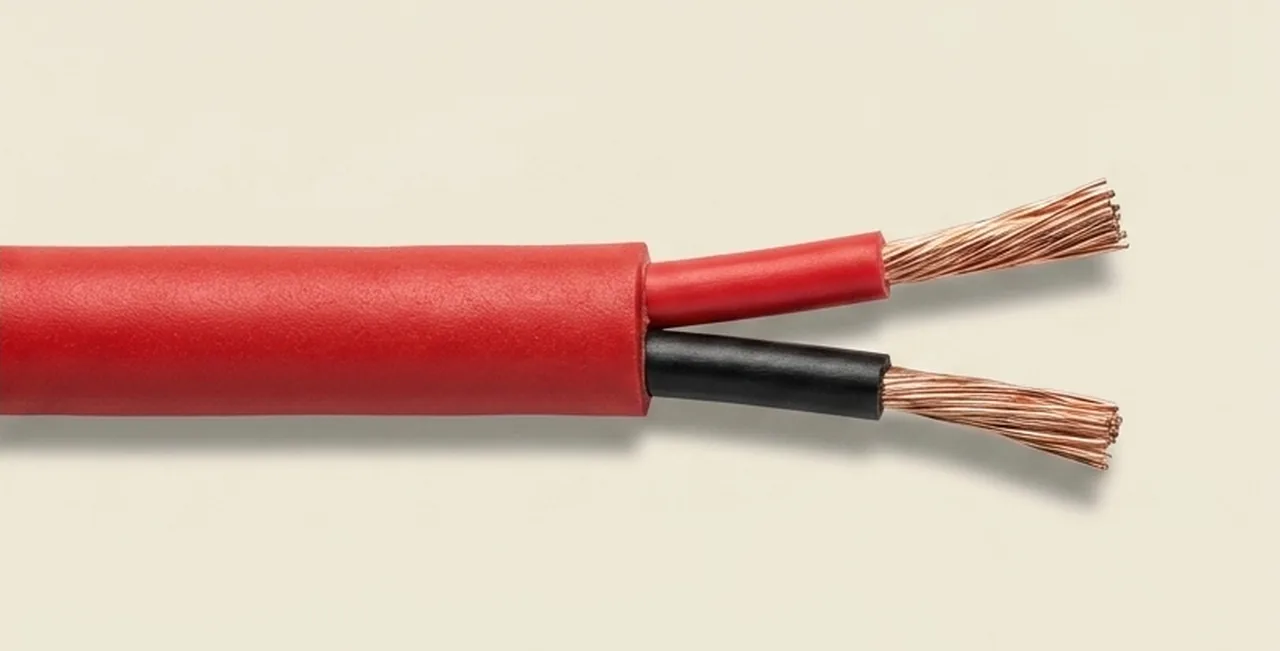
Bare wire is the obvious starting point: strip back the insulation, twist the exposed copper strands tightly together, and clamp them under a binding post or push them into a spring clip. It costs nothing and it works, which is why so many systems start here. The trouble is what happens next. Bare copper sits open to the air, and over the months it oxidises, dust and dirt settle into the strands, and the once-bright joint slowly dulls into a poor one. Stray whiskers of wire can bridge across to the neighbouring terminal and short the amplifier, and the connection works loose with vibration more readily than a plug does. Bare wire genuinely belongs in only two places: a spring-clip terminal that will not accept a plug, and a temporary lash-up while you decide on something better. If you do run bare wire, twist every strand in, leave nothing stray, and re-strip back to fresh copper every year or two as the ends tarnish.
banana plugs: the secure default
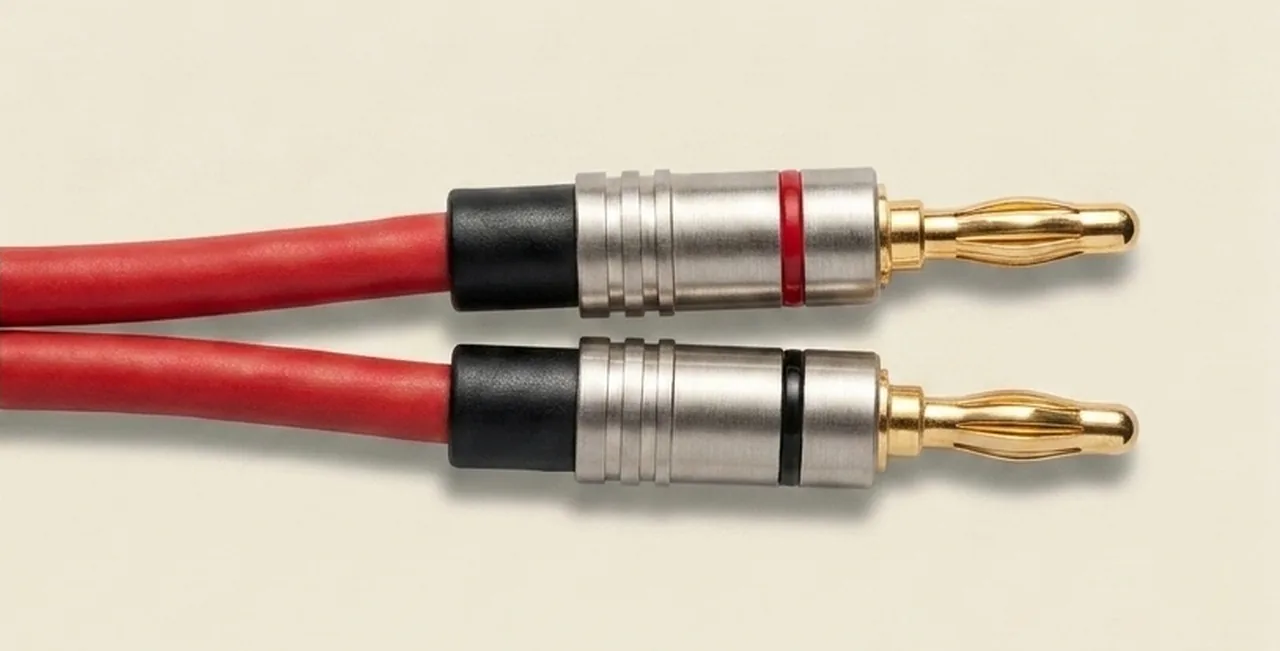
A banana plug is a 4mm pin, fitted to the end of the cable, that pushes firmly into the hole in the back of a binding post. For almost every modern amplifier and speaker it is the connection to choose, and a factory-terminated banana plug is, for most people, simply the best way to finish a speaker cable. It makes a high-pressure, consistent contact, it seals the vulnerable copper away from the air so the joint does not degrade over time, and it lets you connect and disconnect cleanly whenever you rearrange the system. The one common exception is Cyrus, whose amplifiers use BFA sockets that need Cyrus's own Z-plugs rather than a standard 4mm banana, so check your amplifier before you buy. Everywhere else, a well-made banana is the sensible destination.
spades: the bolted-down alternative
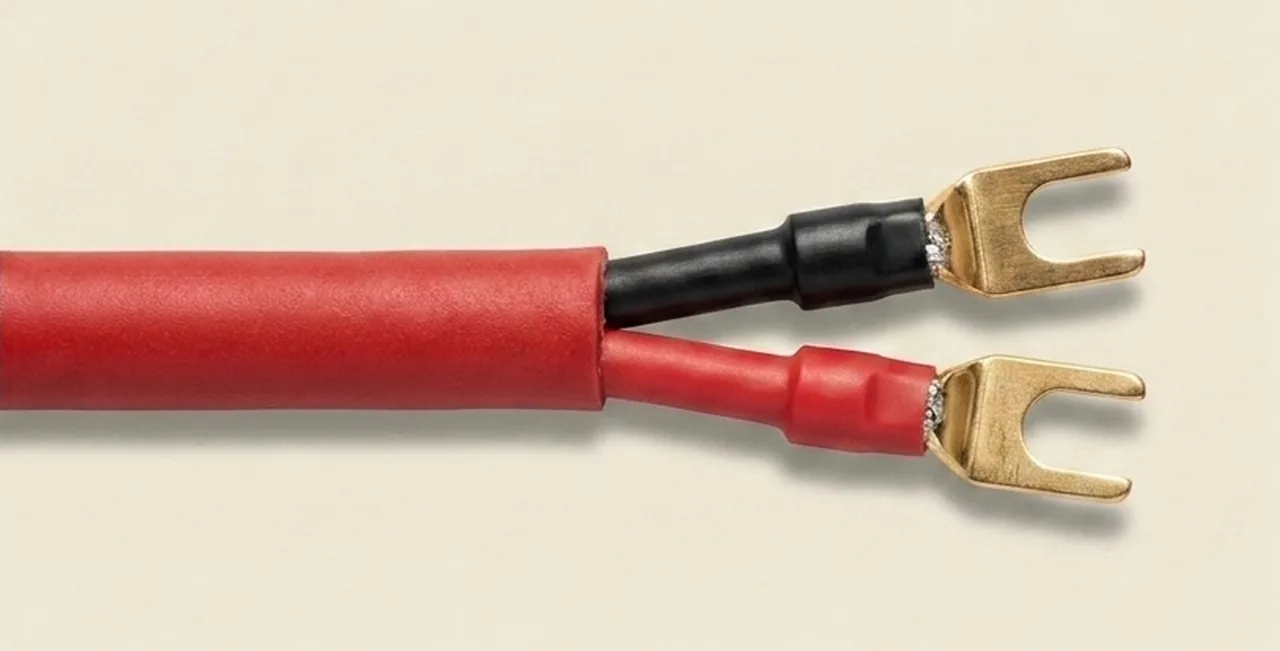
A spade connector is a flat U-shaped fork, again fitted to the cable end, that slips around the threaded shaft of a binding post and is clamped tight as you screw the collar down onto it. Many listeners prefer a spade precisely because it is bolted rather than pushed, giving a large, firm contact area, and some older or higher-end amplifiers favour them. The one thing a spade asks of you is an occasional check: the collar can loosen with vibration and temperature over the years, so nip it up now and again. Where a binding post accepts either, a spade and a banana are both excellent, and the choice comes down to the sockets in front of you and your own preference.
how the plug is actually fitted
Here is the part the marketing rarely explains, and it matters, because the plug and the joint that holds it are real links in the signal path, and like any part of that path they can be done well or badly. There are several ways a plug is fixed to the cable. Some are screwed on, a small grub screw clamping the conductor, an approach Chord Company call ScrewLoc. Some are compression fittings that grip the wire air-tight with no solder at all, Chord's AirLoc being the example. Others are crimped, such as Chord's Ohmic plugs, which are squeezed onto the conductor under great force by a special crimping tool, one that is not sold to the public and is issued only to authorised retailers for fitting and service. Where a plug is soldered instead, the type of solder and the quality of the joint both play a part, and a cold or careless solder joint is a genuine flaw in the chain. The plug material and the joint are also, like any conductor, susceptible to radio-frequency interference, which is one more reason a properly made termination is worth having over a rough one.
One practical note follows from all of this. Because a good termination is a precise job, and some plugs can only be fitted with tools the maker keeps in-house, buying cable ready-terminated, or having a retailer terminate it, is usually more reliable than a kitchen-table attempt. Chord, for instance, will terminate a cable to whatever length you need, though the rule is whole metres, with retailers handling the more affordable ranges and Chord itself finishing its higher-end cables. If you are cutting your own runs, that is an argument for choosing a plug you can fit properly, or for letting the shop do it.
so which should you use?
For the great majority of systems, a factory-terminated banana plug is the right answer: secure, protected from the air, easy to live with, and reliable for years. Choose spades instead where your amplifier and speakers favour them, or where you simply prefer a bolted connection, and remember to check them occasionally. Keep bare wire for spring-clip terminals that leave you no choice, or as a stopgap until you fit something better. And if you are bi-wiring, remember you will need four terminations per speaker rather than two, so factor that in when you buy. Our bi-wiring guide covers that arrangement.
the two-minute checklist
Standard 4mm binding posts? A factory-terminated banana plug is the default best choice. Cyrus amplifier? Use its BFA Z-plugs, not an ordinary banana. Prefer a bolted contact, or older posts that suit it? Fit spades, and re-tighten them occasionally. Only a spring clip, or just setting up temporarily? Bare wire, twisted tight with no stray strands, re-stripped every year or two. Buying custom lengths? Have them terminated by the maker or the shop, in whole metres, rather than soldering at home. Bi-wiring? Four terminations per speaker. And treat the plug and its joint as part of the cable, because that is exactly what they are.
The wire carries the signal, but the ends are where it lives or dies. Fit a good plug well, protect the copper, and the connection you make today will still be sound in ten years. Happy listening.